
Relocating to a new city often means more than just moving household belongings—it also involves transporting your trusted two-wheeler safely. Whether you’re moving for a new job, higher education, business, or simply shifting your home, one question often comes up:
Should you transport your bike by road or by train?
Both options are widely used across India, and each has its own advantages and limitations. While train transport has been a popular choice for years due to its affordability, professional road transport has become increasingly preferred because of its convenience, better safety standards, and door-to-door service.
In this guide, we’ll compare bike transport by road vs train in detail, covering everything from cost and safety to delivery time and convenience. By the end of this article, you’ll know which option best suits your needs.
Why Choosing the Right Bike Transport Method Matters
A motorcycle is more than just a mode of transportation—it’s often a valuable investment and an essential part of daily life. Improper handling during transit can lead to:
- Scratches and dents
- Broken mirrors or indicators
- Fuel leakage
- Damaged suspension
- Bent alloy wheels
- Delayed delivery
- Unexpected repair costs
Choosing the right transportation method minimizes these risks and ensures your bike reaches its destination in excellent condition.
Understanding Bike Transport by Road
Road transport involves shipping your motorcycle using specially designed transport vehicles or carriers operated by professional logistics companies.
Unlike traditional parcel services, professional movers collect the bike from your location, securely pack it, transport it, and deliver it directly to your destination.
This method has become increasingly popular because it offers greater convenience and flexibility.
How Road Transport Works
The typical process includes:
- Booking the transport service.
- Scheduling a pickup date.
- Inspecting and documenting the bike’s condition.
- Protective packing using professional materials.
- Safe loading into a transport carrier.
- Transportation to the destination.
- Doorstep delivery and final inspection.
Many customers also choose road transport when relocating their household belongings, as it allows them to move everything through a single relocation partner.
Understanding Bike Transport by Train
Indian Railways allows motorcycles to be transported through its parcel or luggage service.
Customers are generally required to:
- Deliver the bike to the railway station.
- Complete documentation.
- Pack the motorcycle as per railway guidelines.
- Collect it from the destination station.
Although this option may reduce transportation costs in some cases, it often requires additional planning and effort.
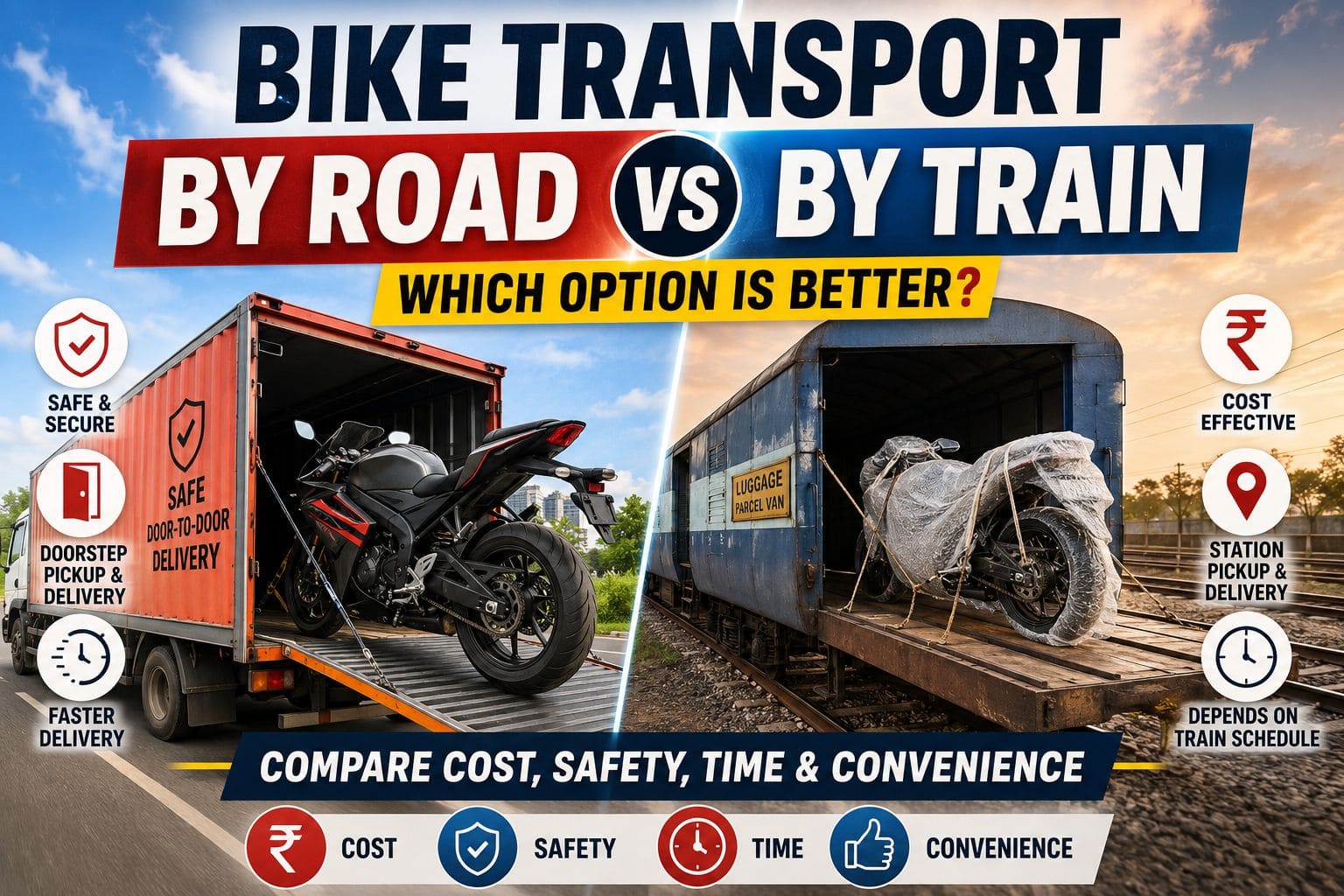
Road vs Train: Feature Comparison
| Feature | Road Transport | Train Transport |
|---|---|---|
| Door-to-Door Delivery | ✔ Yes | ✘ No |
| Pickup from Home | ✔ Yes | ✘ No |
| Delivery to Home | ✔ Yes | ✘ No |
| Professional Packing | ✔ Yes | Limited |
| Transit Tracking | Often Available | Limited |
| Flexibility | High | Moderate |
| Transit Time | Generally Faster | Depends on Train Schedule |
| Convenience | Excellent | Average |
| Handling Risk | Lower | Moderate |
Safety Comparison
Safety is one of the biggest concerns when transporting a motorcycle.
Road Transport
Professional transport companies usually use:
- Bubble wrap
- Foam sheets
- Stretch film
- Protective blankets
- Secure tie-down straps
- Trained loading staff
These measures reduce movement during transit and protect delicate parts like mirrors, indicators, and body panels.
Train Transport
Train transportation generally involves multiple handling points.
The motorcycle may be:
- Loaded manually
- Shifted several times
- Stored alongside other cargo
If the bike isn’t packed properly, minor cosmetic damage becomes more likely.
Winner
Road transport usually provides better protection for modern motorcycles, especially premium or sports bikes.
Convenience Comparison
Convenience is where road transport has a significant advantage.
With professional road transport, you simply schedule a pickup, hand over your bike, and receive it at your new address.
Train transport usually requires:
- Visiting the railway station
- Completing paperwork
- Waiting during parcel processing
- Collecting the bike personally after arrival
For busy professionals and families, this additional effort can become inconvenient.
Cost Comparison
One of the main reasons people consider train transport is affordability.
However, transportation cost depends on several factors:
- Distance
- Motorcycle model
- Weight
- Packing requirements
- Insurance
- Pickup and delivery location
While railway charges may appear lower, don’t forget to include:
- Travel to the railway station
- Local transportation
- Packing expenses
- Time spent on documentation
Sometimes the overall savings are much smaller than expected.
Instead of choosing the cheapest option, it’s often wiser to consider the overall value, safety, and convenience.
Delivery Time
Delivery time depends on:
- Distance
- Weather
- Route availability
- Transport schedule
Road transport companies generally provide estimated delivery windows and can adjust routes based on operational requirements.
Train deliveries depend entirely on railway schedules, parcel processing, and station operations.
Unexpected delays can occur if trains are rescheduled.
Packing Standards
Packing plays a major role in protecting your motorcycle.
Professional movers typically use:
- Bubble wrapping
- Foam protection
- Corrugated sheets
- Waterproof covers
- Protective corner guards
- Stretch wrapping
These materials help protect painted surfaces from scratches and dust.
Proper packing is especially important when transporting premium motorcycles over long distances.
Insurance Matters
No matter which transportation method you choose, insurance should never be overlooked.
Transit insurance can help cover losses caused by:
- Accidental damage
- Fire
- Theft
- Natural disasters
Before booking any transport service, ask about available insurance options and understand what is covered.
Which Option Is Better for Different Situations?
You’re Relocating Your Home
Road transport is usually the better choice because it can be combined with household shifting, reducing coordination and simplifying the move.
You Own a Premium Motorcycle
Motorcycles from brands like Royal Enfield, KTM, Harley-Davidson, BMW, Triumph, Ducati, and Kawasaki deserve professional packing and secure handling.
Road transport generally provides better protection.
You’re Looking for Maximum Convenience
Choose road transport if you prefer:
- Doorstep pickup
- Doorstep delivery
- Professional packing
- Minimal paperwork
You’re on a Tight Budget
If your destination is well connected by rail and you’re comfortable handling station procedures yourself, train transport may be a practical alternative.
Tips Before Transporting Your Bike
Regardless of the transport method, following these steps can help ensure a smooth experience.
Wash Your Bike
A clean motorcycle makes it easier to identify any existing scratches or dents.
Take Photos
Photograph the bike from all sides before handing it over.
These images can serve as useful records if any dispute arises.
Remove Personal Belongings
Don’t leave:
- Helmets
- Documents
- Chargers
- Mobile holders
- Tools
- Luggage
inside the motorcycle during transportation.
Keep Fuel Low
Many transport providers recommend keeping only a small amount of fuel in the tank for safety reasons.
Carry Essential Documents
Keep the following documents accessible:
- Registration Certificate (RC)
- Insurance papers
- Government-issued ID
- Booking receipt
Common Mistakes to Avoid
Many customers unintentionally make mistakes that increase the risk of delays or damage.
Avoid these common errors:
- Booking at the last minute.
- Choosing a transporter based only on the lowest price.
- Not asking about insurance.
- Ignoring customer reviews.
- Forgetting to inspect the motorcycle before delivery.
- Leaving valuable accessories attached.
- Not reading the service terms carefully.
Planning ahead can prevent unnecessary complications.
How to Choose a Reliable Bike Transport Company
Not every transport company offers the same level of service.
Before booking, consider the following:
Experience
Choose a company with proven expertise in vehicle transportation.
Transparent Pricing
Avoid companies that are unclear about additional charges.
Customer Reviews
Check verified online reviews and testimonials.
Professional Packing
Ask what materials and techniques are used to protect motorcycles during transit.
Customer Support
Reliable communication throughout the transportation process is always a positive sign.
Road Transport: Pros and Cons
Advantages
- Door-to-door delivery
- Better packing
- Lower handling risk
- Professional loading
- Convenient booking
- Faster for many routes
Limitations
- May cost slightly more than train transport on certain routes.
- Delivery time depends on road conditions and traffic.
Train Transport: Pros and Cons
Advantages
- Affordable on selected routes.
- Suitable for long-distance transport.
Limitations
- No doorstep delivery.
- Additional paperwork.
- Limited tracking.
- Less flexible scheduling.
- Multiple handling points.
Expert Recommendation
If convenience, safety, and peace of mind are your priorities, professional road transport is generally the preferred choice.
For customers relocating an entire household, using one trusted company for both household goods and vehicle transportation simplifies the entire moving process.
Companies offering comprehensive relocation solutions—including bike transport services, house shifting, and packers and movers services—can often coordinate the move more efficiently than managing separate providers.
Frequently Asked Questions
Is road transport safer than train transport for motorcycles?
In most cases, yes. Professional road transport offers better packing, secure loading techniques, and doorstep delivery, reducing the chances of transit damage.
Which option is cheaper?
Train transport can have lower base transportation costs, but additional expenses such as station handling, local transportation, and packing should also be considered.
Can premium motorcycles be transported safely?
Yes. Premium motorcycles can be transported safely when packed professionally and handled by experienced vehicle transport specialists.
Should I purchase transit insurance?
If your motorcycle has significant value, transit insurance is highly recommended for additional financial protection.
How early should I book?
Booking at least one to two weeks in advance improves availability and allows enough time for proper planning.
Both road and train transport have their own advantages, and the right choice depends on your priorities. If your focus is on affordability and you’re comfortable managing station procedures, train transport may work well for certain routes.
However, if you value convenience, professional handling, secure packing, and doorstep pickup and delivery, road transport is generally the more practical and reliable option.
When selecting a transport provider, don’t base your decision on price alone. Look for experience, transparent communication, quality packing standards, and positive customer feedback.
If you’re relocating from Bangalore, choosing an experienced relocation company can make the process much smoother. Bangalore Wala Packers offers professional bike transport along with complete relocation solutions, including household shifting and packing services, helping customers move safely and confidently across India.
A well-planned move starts with choosing the right transportation partner—and protecting your bike every step of the way.